Affiliate Marketing for Beginners: How It Works and How to Start Properly
A plain guide to affiliate marketing: how tracking and commissions work, picking a niche, programmes like Amazon Associates, disclosure rules and common scams.
Published 7 min read
In this article
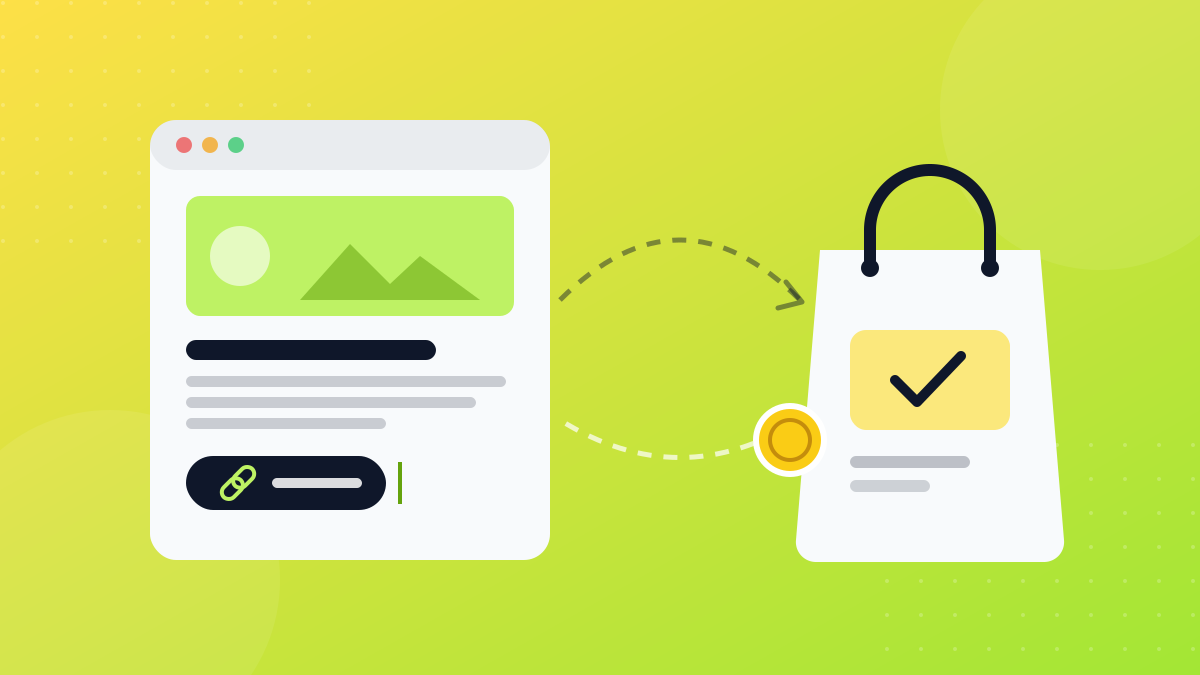
Affiliate marketing means recommending a product or service with a link that's unique to you; when someone buys through that link, the merchant pays you a commission and the buyer pays nothing extra. It's a legitimate, well-established business model, but it depends on genuinely useful content and audience trust, and it takes time before it produces any income.
Short answer: pick a niche you know, join free official programmes, create content that helps people decide what to buy, disclose your links clearly, and expect results to take months and vary from person to person.
What is affiliate marketing?
Every affiliate sale involves up to four parties:
- The merchant: the company selling the product, such as an online shop or a software company.
- The affiliate (you): the owner of a website, channel or account who recommends the product.
- The customer: the reader or viewer who clicks your link and buys.
- The network (sometimes): a middleman platform that hosts many merchants' programmes and handles tracking and payments.
The merchant only pays when a sale or a specific action happens, the customer gets an honest review that helps them choose, and you get paid for the work of creating that content.
How tracking and commissions work
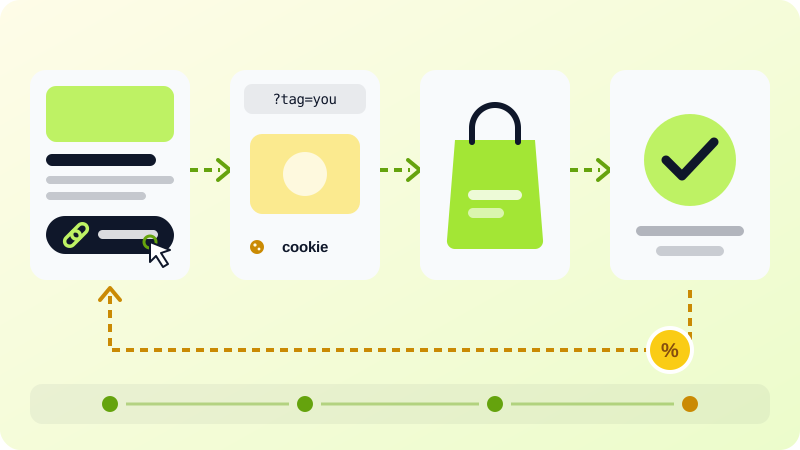
When you join a programme, it gives you a tool for building links that carry your unique ID. The usual sequence:
- You place the link in an article or a video description.
- A reader clicks it, and the merchant records that the visit came from you, usually with a cookie that lasts for a set period.
- If they buy within that window and the purchase qualifies under the programme's terms, a commission is credited to you.
- After the returns and review period, the commission is paid once your balance reaches the minimum payout.
Common commission types
| Type | When you earn |
|---|---|
| Percentage of the sale | When a product is bought; the rate often depends on the product category |
| Fixed amount per sale | When someone buys a subscription or service |
| Per action (lead) | When someone signs up or starts a free trial |
If an order is returned or cancelled, the commission is normally reversed. Every programme sets its own tracking window and rules, so read them before you build a plan around them.
Choosing a niche
Your niche is the topic you'll cover. The classic mistake is choosing one only because the commissions look high. Look for a topic that combines:
- Real knowledge or interest: you'll write dozens of pieces about it, and honest reviews need hands-on experience.
- A problem people search for: "best laptop for students" or "camera gear for beginners".
- Products sold online with affiliate programmes: check before you start that programmes accept creators in your country and audience.
Start narrow, say "home coffee gear" rather than "kitchen", and widen once you've earned your audience's trust.
Where to find affiliate programmes
Big retailers
- Amazon Associates: Amazon's official programme, run separately for each marketplace. Besides the US programme, there's a programme for Amazon.sa in Saudi Arabia at
affiliate-program.amazon.saand one for Amazon.ae in the UAE ataffiliate-program.amazon.ae. Joining is free and subject to review, and commission rates vary by product category.
Affiliate networks
Networks such as Awin, CJ Affiliate and impact.com bring thousands of brands' programmes into one dashboard. You apply to each programme separately, and one merchant may accept you while another declines.
Direct company programmes
Many software, hosting and online course companies run their own programmes. Look in the footer of a company's site for a link called "Affiliates" or "Partners".
Before joining any programme, read the operating agreement: where you're allowed to post links, the minimum payout, and which payment methods work in your country.
Content that works
People don't click a link because it's there; they click because your content helped them decide. Formats that tend to work:
- Hands-on reviews: your own photos and an honest list of pros and cons.
- Head-to-head comparisons: "X vs Y: which one suits you?"
- "Best for" lists: "best headphones for remote work", with a clear reason for each pick.
- Practical tutorials: "how to set up a home office", linking to the tools you used.
- Videos: reviews and comparisons on YouTube with links in the description.
Google's spam policies make clear that not every affiliate site is a problem, but pages that copy product descriptions and reviews straight from the merchant without adding value count as thin affiliate content. Add your experience, opinions and photos, and learn SEO basics so your content reaches people who are actually searching.
Disclosure: tell your audience, clearly
You must tell people clearly that you may earn a commission from your links. It protects their trust in you, and regulators and the programmes themselves require it.
- US FTC guidance: the Federal Trade Commission says disclosures should be clear and close to the recommendation itself; a note at the bottom of the page or on a separate disclosures page often isn't enough. Its example wording is "I get commissions for purchases made through links in this post." In videos, disclose both out loud and on screen.
- Amazon's terms: the US Amazon Associates agreement requires a specific disclosure statement to be shown clearly on your site. Each local programme has its own agreement, so read the one you joined.
- Local rules: check the law where you live. In Saudi Arabia, for example, individuals who publish advertising content on social media need a Mawthooq licence from the General Authority for Media Regulation, so find out whether your activity falls under it.
- Tag links in your code: Google asks site owners to mark advertising and paid links with
rel="sponsored", and many sites apply it to affiliate links:
<a href="https://example.com/product?tag=yourid" rel="sponsored">Product name</a>
Can you use affiliate links with AdSense?
Yes. Google AdSense's policy page explicitly allows affiliate links and non-Google ads on the same site or page, as long as ads don't outweigh your content and other ads aren't made to look like Google ads. Plenty of sites combine both: AdSense for general traffic and affiliate links on review and comparison pages. Learn more about making money from a website with Google AdSense, and if you create your own products, selling digital products can be another income stream.
Realistic expectations and common mistakes
Affiliate marketing is not quick money. For most beginners, the reality looks like this:
- The first months often bring little or nothing, because content needs time to rank in search and build trust.
- Results vary widely by niche, content quality and audience. There's no "typical" figure anyone can honestly promise you.
- Programmes change their rates and rules, so don't depend on just one.
Common mistakes:
- Recommending products you've never used, or praising a poor product because it pays more.
- Stuffing articles with links instead of being genuinely helpful.
- Hiding your disclosure or putting it where nobody sees it.
- Copying the product description straight from the store.
- Breaking programme rules, such as buying through your own link or posting links where they're not allowed, which can get your account closed.
Watch out for affiliate marketing scams
Plenty of offers borrow the name "affiliate marketing" but are really scams or pyramid schemes. Clear warning signs:
- A joining or "activation" fee to start or to withdraw your earnings.
- Earning from recruiting people rather than from selling a real product to real customers.
- Promises of a fixed daily income or "guaranteed profits".
- Expensive "secret" courses that promise to make you rich fast.
Official programmes are free and pay commission only on genuine sales. For more red flags, read how to spot "make money online" scams.
Official sources: FTC: Endorsement Guides FAQ · Amazon Associates · Google AdSense: third-party ads
Frequently asked questions
Do I need a website to start affiliate marketing?
Not always. Some programmes accept YouTube channels or social media accounts. Many, though, ask for a website or app with real content, and a site gives you search traffic that doesn't depend on a single platform's algorithm.
Do I have to pay to join an affiliate programme?
No. Official programmes such as Amazon Associates and the big affiliate networks are free to join; they simply review your application. Anyone asking for a fee to accept you or to unlock your earnings is running a scam.
How long until I earn my first commission?
There's no fixed timeline. Building content that attracts people ready to buy usually takes months, and commissions are paid some time after the sale under each programme's terms. Results vary a lot between people and niches.
Can I share affiliate links on WhatsApp or by email?
It depends on the programme. Some restrict where links may appear. Read the operating agreement and programme policies before posting links outside your own site, because breaking the rules can get your account closed and your earnings cancelled.
What if I buy something through my own link?
Many programmes prohibit or don't count purchases made through your own link or for your household, and may treat it as a violation. Check your programme's policies and never rely on it.
Related tutorials
Earning online
How to Open an Online Store in Saudi Arabia: Salla vs Zid
Open an online store in Saudi Arabia with Salla or Zid: Freelance Certificate or CR, business bank account, store authentication, payments and shipping.
· 6 min read

Earning online
Remote Work From the Gulf: Where to Find Jobs, Tools and Tips
A practical guide to remote work from Saudi Arabia and the Gulf: job types, global and regional platforms, tools, time zones, getting paid, rules and scams.
· 7 min read
Earning online
Saudi Freelance Certificate (وثيقة العمل الحر): Requirements, Steps and Benefits
A guide to the Saudi Freelance Certificate from freelance.sa: who can get it, required documents, how to apply, fees, validity and what it lets you do.
· 6 min read