Remote Work From the Gulf: Where to Find Jobs, Tools and Tips
A practical guide to remote work from Saudi Arabia and the Gulf: job types, global and regional platforms, tools, time zones, getting paid, rules and scams.
Published 7 min read

In this article
Remote work from the Gulf means doing your job online, from home or anywhere with a good connection, for an employer or clients who may be in your own country or abroad. The main paths are a full-time remote job, part-time or contract work, and freelancing on platforms. You find them on global job boards and freelance sites, regional job sites, and in Saudi Arabia through national programmes, but you also need the right tools, a plan for time zones, a safe way to get paid, and awareness of your country's rules.
In short: decide which type of remote work fits you, build a clear profile and portfolio, apply on trusted platforms, set up reliable tools, check the legal and tax side where you live, and treat any job that asks you for money as a scam.
Types of remote work
| Type | How it works | Good for |
|---|---|---|
| Full-time remote job | You are an employee with a salary and contract, but you work online | People who want stable income and benefits |
| Part-time or contract | Fixed hours or a fixed-term project, often paid monthly or hourly | Students, parents, or people adding a second income |
| Freelancing | You sell services per project or per hour to several clients | People with a clear skill who can find their own clients |
The jobs themselves are mostly computer-based: customer support, sales and account management, data entry and admin, translation and content writing, design and video editing, marketing, programming and IT, and online teaching or tutoring.
If you're new to working for clients, start with our guide on how to start freelancing from zero.
Where to find remote jobs
Global platforms
- LinkedIn: filter job searches by "Remote" and set your profile to show you're open to work. Many companies also post remote roles on their own career pages.
- Remote-focused job boards: sites that only list remote jobs make searching easier. Read each listing carefully, since some roles are limited to certain countries or time zones.
- Freelance marketplaces: Upwork, Fiverr and Freelancer.com for project-based work with international clients.
Regional platforms
- Mostaql and Khamsat: Arabic freelance platforms, useful if your clients are Arabic speakers.
- Regional job sites: Gulf-focused job boards such as Bayt list jobs across the region, and you can filter or search for remote roles.
- Saudi Arabia: the Ministry of Human Resources and Social Development runs a Telework (العمل عن بعد) programme for Saudi nationals, where employers hire Saudis for jobs done remotely under the labour law. Jobs are advertised on Jadarat, the national unified employment platform managed by the Human Resources Development Fund (HRDF). Both are for Saudi citizens.
Whichever platform you use, apply to roles that match your skills, tailor each application, and keep a simple list of where you applied.
Tools you'll need
Remote work runs on a small set of tools. You don't need to buy everything; many have free plans.
- Hardware: a reliable laptop, a headset with a microphone, and a quiet corner for calls.
- Internet: a stable home connection plus a backup, such as a mobile data hotspot.
- Video calls: Zoom, Google Meet or Microsoft Teams, depending on the company.
- Chat and collaboration: Slack or Teams for messages, Google Workspace or Microsoft 365 for documents.
- Organisation: a task manager or notes tool such as Notion or Trello to track your work.
- Security: a password manager and two-factor authentication on work and payment accounts.
Test your camera, microphone and screen sharing before the first interview. Small technical problems make a bigger impression online than in person.
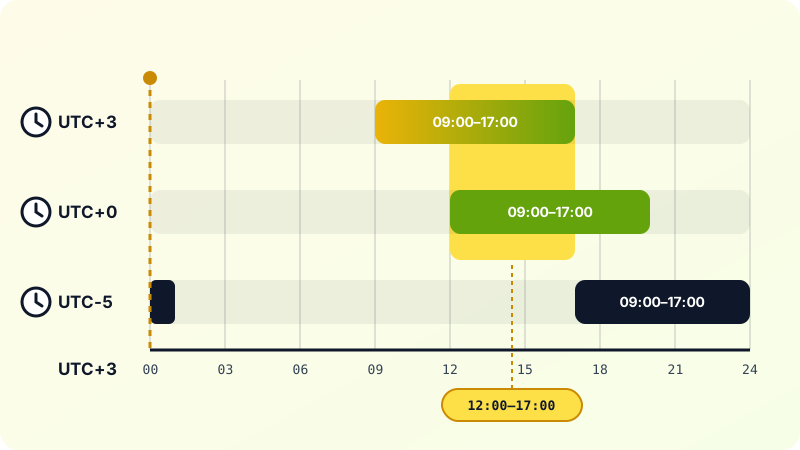
Managing time zones
Most Gulf countries are on UTC+3 (Saudi Arabia, Qatar, Kuwait and Bahrain) or UTC+4 (the UAE and Oman), and none of them change their clocks for daylight saving. Your clients might.
- Europe: the UK is 3 hours behind Riyadh in winter and 2 hours behind in summer, which leaves a comfortable overlap in the afternoon.
- US East Coast: New York is 8 hours behind Riyadh in winter and 7 in summer, so normal working days barely overlap. Expect early-evening or late-night meetings.
- Asia: India is 2.5 hours ahead of Riyadh, which makes morning overlap easy.
Agree on core hours when you're both online, write them in your contract or email, and put meetings in a shared calendar so the time converts automatically. Weekends differ between countries too, so keep that in mind when you promise deadlines.
Getting paid
How you get paid depends on the type of work:
- Employees usually receive a salary by bank transfer. With a foreign employer, check the currency, transfer fees and who pays them.
- Freelancers on platforms receive payment through the platform, then withdraw to a bank account or a payment service. Available methods differ by platform and country, so check them before you accept work.
- Direct clients can pay by international bank transfer or a payment service. Send a clear invoice and agree on payment terms, such as a deposit before you start.
Exchange rates and fees reduce what reaches your account, so include them when you set your price. Keep a record of every payment and invoice.
Legal and tax awareness
Rules differ by country and change over time, so check official sources where you live rather than relying on forums. A few pointers:
- Saudi Arabia: if you freelance, look at the Freelance Document issued through the official freelance platform; our guide to the Saudi Freelance Document explains what it covers. Remote jobs through the national Telework programme follow the labour law like other jobs.
- UAE: the official government portal says working without a valid work permit is not allowed, and the Ministry of Human Resources and Emiratisation issues freelance work permits for people who work independently. Free zones offer their own licences.
- Other Gulf countries: check your labour ministry and business licensing authority.
- Your visa or residency: if you are a resident on an employer-sponsored visa, check whether side work is allowed before taking it on.
- Tax: some countries tax individual income and some don't, and VAT can apply to businesses above certain thresholds. If you're unsure, ask an accountant.
This article is general information, not legal or tax advice.
How to avoid remote job scams
Fake remote jobs are common because they target people eager to work from home. Warning signs:
- You're asked to pay for training, equipment, a "registration fee" or a visa before starting.
- You're offered a high salary for very little work, with no real interview.
- The "recruiter" contacts you only on WhatsApp or Telegram and uses a free email address.
- The job involves liking videos, rating products or "completing tasks", then depositing money to unlock payouts.
- You're asked to receive money into your account and transfer it on. This can make you part of money laundering.
- They ask for your national ID, bank details or verification codes early in the process.
Check the company's official website and LinkedIn page, and never share one-time codes. Read our guides on spotting "make money online" scams and protecting yourself from WhatsApp and SMS scams in the Gulf.
Your first steps
- Pick one role you can do well, and write a clear headline for it.
- Update your CV and LinkedIn profile with results, not only duties.
- Build a small portfolio of 3 to 5 samples.
- Set up your tools and test them.
- Apply consistently on two or three trusted platforms and track your applications.
Remote work can offer flexibility, but finding the right role usually takes time and results vary from person to person. Keep your current income until remote work is steady.
Official sources: Saudi Telework programme FAQ, HRDF: Jadarat platform, UAE government portal: work permits.
Frequently asked questions
Can I work remotely for a foreign company while living in Saudi Arabia or the UAE?
Often yes, but the arrangement matters. You might be hired as a contractor, through an employer-of-record service, or as a freelancer. Each has different implications for your residency, licensing and tax, so check your country's rules and read the contract carefully before you sign.
Which remote jobs are easiest to start with?
Roles that are done entirely on a computer and have clear outputs, such as customer support, data entry, translation, content writing, design and programming. Customer support and admin roles usually need less specialised experience, while programming and design depend heavily on a strong portfolio.
Is a remote job that pays per 'task' or 'like' real?
Be very careful. Schemes that pay you small amounts for liking posts or completing simple tasks, then ask you to deposit money to unlock bigger earnings, are a common scam. A real employer never asks you to pay to get or keep a job.
Do I need a fast internet connection?
You need a stable connection that can handle video calls without dropping, plus a backup such as a mobile hotspot for outages. Stability usually matters more than top speed for most remote jobs.
How long does it take to land a remote job?
It varies widely. Remote roles attract applicants from many countries, so competition is high. Many people apply for weeks or months before getting an offer, and building a portfolio and a clear profile shortens that time more than sending many generic applications.
Related tutorials

Earning online
How to Open an Online Store in Saudi Arabia: Salla vs Zid
Open an online store in Saudi Arabia with Salla or Zid: Freelance Certificate or CR, business bank account, store authentication, payments and shipping.
· 6 min read

Earning online
Saudi Freelance Certificate (وثيقة العمل الحر): Requirements, Steps and Benefits
A guide to the Saudi Freelance Certificate from freelance.sa: who can get it, required documents, how to apply, fees, validity and what it lets you do.
· 6 min read

Earning online
How to Sell on Amazon.sa and Noon: A Beginner's Guide for Saudi and Gulf Sellers
What you need to sell on Amazon.sa, Amazon.ae and Noon: commercial registration, VAT, ID and bank details, fulfilment options, fees and common mistakes.
· 7 min read