How to Sell on Amazon.sa and Noon: A Beginner's Guide for Saudi and Gulf Sellers
What you need to sell on Amazon.sa, Amazon.ae and Noon: commercial registration, VAT, ID and bank details, fulfilment options, fees and common mistakes.
Published 7 min read
In this article
To sell on Amazon.sa or Noon in Saudi Arabia you generally need a business registered in the Kingdom (a commercial registration), a national ID, Iqama or passport, a business bank account for payouts, and, for Noon, a VAT registration number. You create a seller account, upload your documents for verification, list your products, and then choose whether the platform stores and ships your orders (Fulfilled by Amazon or Fulfilled by noon) or you ship them yourself.
In short: get your commercial registration and paperwork ready first, open your seller account, start with a handful of products, run the numbers on fees before you set prices, and expect a learning period of several months.
Amazon.sa, Amazon.ae and Noon at a glance
Amazon.sa is Amazon's store for Saudi Arabia and Amazon.ae is its store for the UAE. Noon is a regional marketplace that operates in Saudi Arabia, the UAE and Egypt. All three let third-party sellers list products next to the platform's own stock, and all three offer a fulfilment service where they store and deliver your products for you.
| Amazon.sa / Amazon.ae | Noon | |
|---|---|---|
| Seller dashboard | Seller Central | Seller Lab |
| Platform fulfilment | Fulfilment by Amazon (FBA) | Fulfilled by noon (FBN), shown to shoppers as "noon Express" |
| Other options | Easy Ship (you pack, Amazon delivers) or ship yourself | Fulfilled by Partner (FBP), including DirectShip (you pack, noon collects and delivers) |
| Main fee types | Referral fee per sale, fulfilment and storage fees if you use FBA | Referral fee, outbound or DirectShip fee, storage cost |
What you need before you register
Registration goes faster when your documents are ready and consistent. The names on your ID, commercial registration and bank account should match.
Commercial registration
- Amazon.sa: Amazon says businesses located in Saudi Arabia need a commercial registration. Its page also says Saudi nationals can use either a commercial registration or a Freelancing Practitioner Certificate, and points to the Saudi Business Center for registration.
- Noon (KSA): Noon's help centre currently says you need a valid commercial registration that authorises trading or e-commerce, and that freelance certificates are no longer accepted for new KSA seller registrations, following Ministry of Commerce guidance.
- Amazon.ae and Noon UAE: you need a valid UAE trade or commercial licence, whether your business is on the mainland or in a free zone.
Rules around freelance certificates and online selling have changed recently, so if you hold one, read our guide to the Saudi Freelance Document and confirm with the platform before relying on it for selling products. For most people selling physical goods, a commercial registration is the safer route.
Identity and bank details
- ID: Amazon.sa asks for a Saudi national ID. Noon accepts a Saudi national ID, an Iqama or a passport for KSA sellers. The person on the ID should be the person on the commercial registration, or you'll need a power of attorney.
- Bank account: you need an account where the platform can send your earnings. Noon says it does not accept personal bank accounts for sellers and that the account name should match the registered business name.
- Contact details: a business email and a phone number you can answer during verification.
VAT
In Saudi Arabia, VAT registration with ZATCA is mandatory once your annual revenue passes a threshold (SAR 375,000 at the time of writing), and voluntary above a lower threshold. Noon currently goes further and asks every KSA seller for a valid VAT number. Tax rules affect your prices and invoices, so speak to an accountant if you're unsure.
How to register, step by step
- Prepare documents: commercial registration, ID, bank letter or statement, and VAT certificate if you have one. Scan them clearly.
- Create your account: sign up on the official seller site (sell.amazon.sa, sell.amazon.ae or Noon's partner site). Use a business email you'll keep long term.
- Enter business details: your business name exactly as written on your registration, your address and your tax details.
- Pass verification: the platform reviews your documents and may ask for more information. Answer quickly and don't submit edited or mismatched documents.
- List your first products: add titles, clear photos, specifications and prices. Check the seller site for any new-seller offers and their deadlines, as some depend on listing early.
- Choose fulfilment for each product, then start with small quantities.
Some product categories are restricted or need extra approval or certificates. Check the platform's help pages before you buy stock, not after.
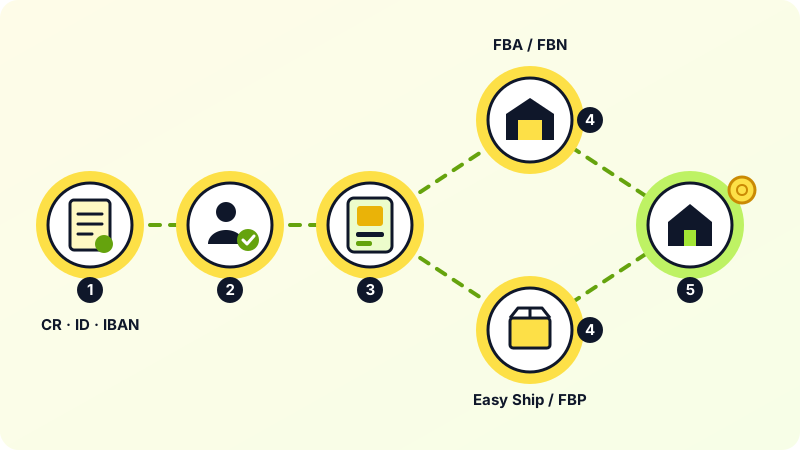
Fulfilment options: let the platform ship or do it yourself
Platform fulfilment (FBA or FBN). You send stock to the platform's warehouse. It stores your products, packs and delivers orders, and handles customer questions and returns. Noon says FBN items appear with a "noon Express" tag. This is convenient and often attractive to shoppers, but you pay fulfilment and storage fees, and stock that sits for a long time gets expensive.
You pack, the platform delivers (Easy Ship or DirectShip). You keep stock at your own location and pack each order, then the platform collects and delivers it. Noon's DirectShip requires you to use noon packaging and process orders before a daily cut-off time.
You handle everything. You store, pack and deliver orders yourself. You keep more control, but you are responsible for delivery speed and quality.
Many sellers use platform fulfilment for fast-selling, compact items and ship slower or bulky ones themselves.
Understanding the fees
Fees change often, so always check the official fee pages on the day you calculate. In general:
- Referral fee: a percentage of each sale that depends on the product category. At the time of writing, Amazon.sa's pricing page says most referral fees are between 5% and 15%.
- Fulfilment fees: a per-unit fee if you use FBA or FBN, based on size and weight.
- Storage fees: charged for stock kept in the warehouse, with extra charges for items stored for a long time.
- Shipping fees for Easy Ship or DirectShip orders.
- Optional costs: advertising, promotions and professional product photos.
- VAT on fees: Amazon.sa says its listed fees exclude VAT, which is added on top.
Both platforms offer calculators. Noon's Fees and Revenue Calculator in Seller Lab compares FBN and FBP side by side for a product. Use them before you set a price, and include the product cost, packaging and your own time.
Practical tips for new sellers
- Start small. List a few products you understand well rather than a large catalogue you can't manage.
- Check demand and competition by searching the platform as a shopper.
- Write clear listings in Arabic and English where possible: accurate title, real photos, full specifications.
- Protect your account health. Ship on time, avoid cancellations and answer customer messages quickly. Poor metrics can limit or suspend your account.
- Keep records of every purchase, sale and fee for tax and accounting.
- Secure your seller account with a strong password and two-factor authentication.
If you'd rather control your own brand and customer list, compare marketplaces with running your own shop using our guide on opening an online store in Saudi Arabia with Salla or Zid. Many sellers do both.
Common mistakes to avoid
- Buying a lot of stock before testing. Order a small batch first and see if it sells.
- Pricing without counting all fees. Referral, fulfilment, storage, shipping, returns and VAT can erase your margin.
- Mismatched documents. A business name that differs between your registration and bank account causes delays.
- Selling restricted or counterfeit items. This can lead to account suspension and legal trouble.
- Ignoring customer messages and returns. They affect your ratings and account health.
- Paying "agents" who promise guaranteed approval or sales. Registration is done on the official seller sites. Our guide on spotting "make money online" scams covers the warning signs.
What to expect
Selling on marketplaces is a real business with real costs. Most new sellers need months to find products that sell and build reviews, and results vary widely. Treat your first products as experiments and don't put in money you can't afford to lose.
Official sources: Amazon.sa: commercial licence requirement, Amazon.sa: beginner's guide, Noon: documents required to sell.
Frequently asked questions
Can I sell on Amazon.sa or Noon as an individual without a company?
For physical products in Saudi Arabia, plan on needing a commercial registration. Amazon.sa's page says Saudi nationals can use a commercial registration or a Freelancing Practitioner Certificate, but Noon says it no longer accepts freelance certificates for new KSA sellers. Check each platform's current rules before you apply.
Do I need to be VAT registered to sell on Noon in Saudi Arabia?
At the time of writing, Noon's help centre says all sellers operating in KSA must provide a valid VAT registration number. Amazon.sa does not list VAT on its main registration pages, but VAT law still applies to your business, so check ZATCA's rules or ask an accountant.
Should I choose FBA or ship orders myself?
Fulfilment by the platform saves you storage, packing and delivery work and can make your listings more attractive, but you pay fulfilment and storage fees and must send stock in advance. Shipping yourself costs less upfront and suits slow-moving or bulky items. Many sellers test a few products each way.
Can I sell on both Amazon and Noon at the same time?
Yes, many sellers list on both. Keep your stock counts accurate across both accounts so you don't sell an item you no longer have, and remember that each platform has its own fees, rules and performance targets.
How soon will I make a profit?
There is no reliable timeline. Many new sellers spend the first months learning, testing products and paying for stock and fees before they see steady profit, and some products never sell well. Start small and only invest money you can afford to lose.
Related tutorials
Earning online
How to Open an Online Store in Saudi Arabia: Salla vs Zid
Open an online store in Saudi Arabia with Salla or Zid: Freelance Certificate or CR, business bank account, store authentication, payments and shipping.
· 6 min read

Earning online
Remote Work From the Gulf: Where to Find Jobs, Tools and Tips
A practical guide to remote work from Saudi Arabia and the Gulf: job types, global and regional platforms, tools, time zones, getting paid, rules and scams.
· 7 min read

Earning online
Saudi Freelance Certificate (وثيقة العمل الحر): Requirements, Steps and Benefits
A guide to the Saudi Freelance Certificate from freelance.sa: who can get it, required documents, how to apply, fees, validity and what it lets you do.
· 6 min read